Uthappam
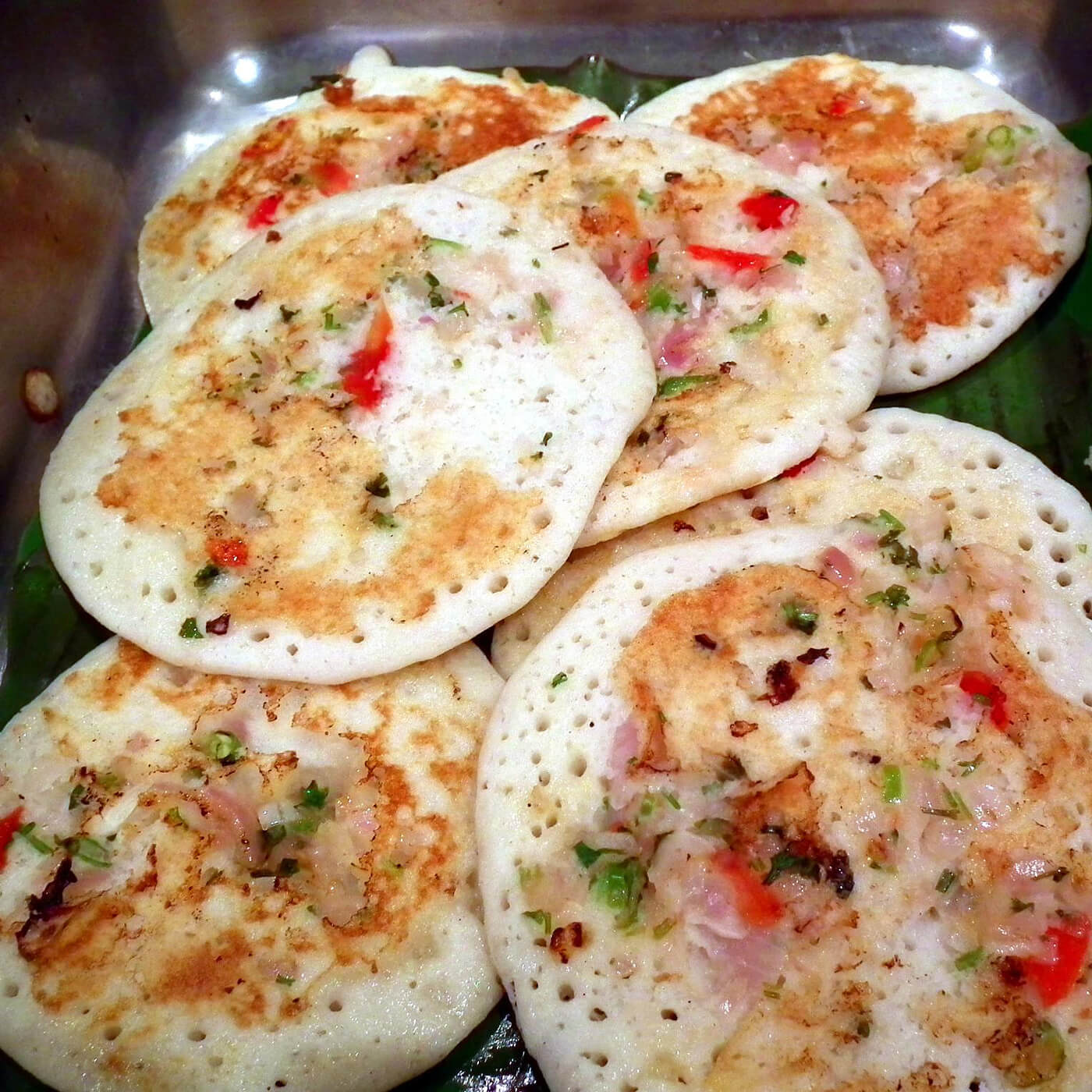
Photo: By Ramesh NG / Flickr Mini Uttappam, CC BY-SA 2.0, https://commons.wikimedia.org/w/index.php?curid=15816485
Uthappam (also spelled uttapam, uttappam, or oothappam) is a thick, soft, fermented rice-and-lentil pancake from South India. It belongs to the same family as the dosa, made from the same batter of ground rice and urad dal (black gram lentils), but where a dosa is spread thin and cooked crisp, an uthappam is poured thick and loaded with toppings pressed into the still-wet surface. The result is something closer to a savory pancake than a crepe: spongy, tangy from fermentation, and studded with vegetables.
The name comes from Tamil: utthia (or uttria, meaning "poured") plus appam (a round pan-cooked cake). While regular appam is cooked in a round-bottomed pan, uthappam is cooked on a flat skillet or tawa. It appears in ancient Tamil literature and remains a breakfast staple across Tamil Nadu, Karnataka, Kerala, and beyond.
The classic toppings are onions, tomatoes, green chilies, capsicum (bell pepper), and fresh coriander, scattered across the batter as it sets on the griddle. Variations include grated coconut, carrots, and beets. The pancake cooks until golden on the bottom, then gets flipped to finish. Uthappam is almost always served with sambar (a tangy lentil-vegetable stew) and coconut chutney, the same accompaniments that go with dosa and idli.
What sets uthappam apart from most pancakes on this site is the fermented batter. The rice and lentils soak overnight, get ground into a paste, and then ferment for 8 to 12 hours until the batter rises and develops a pleasant sourness. That fermentation gives uthappam its characteristic tang, its airy texture, and (as a bonus) makes it easier to digest than unfermented batters.
See also: Chila, the quick gram flour pancake from North India that skips the fermentation entirely.
Uthappam (South Indian Vegetable Pancake)
Ingredients (Makes 6 to 8 uthappams)
For the Batter:
- Rice 1½ cups (a mix of parboiled rice and regular rice works best)
- Urad dal (black gram lentils) ½ cup
- Fenugreek seeds ½ teaspoon (helps fermentation)
- Salt 1 teaspoon (add after fermentation)
- Water as needed for grinding
For the Toppings:
- Onion 1, finely chopped
- Tomato 1, finely chopped
- Green chilies 2, finely chopped
- Capsicum (bell pepper) ¼ cup, finely chopped (optional)
- Fresh coriander a handful, chopped
- Grated carrot ¼ cup (optional)
- Grated coconut 2 tablespoons (optional)
For Cooking and Serving:
- Oil or ghee for the griddle
- Sambar for serving
- Coconut chutney for serving
Instructions
Step 1: Soak (The Night Before)
- Wash the rice and urad dal separately. Soak the rice in plenty of water. Soak the urad dal with fenugreek seeds in a separate bowl. Let both soak for at least 4 to 6 hours or overnight.
Step 2: Grind
- Drain the urad dal and grind it first with a little water until light, fluffy, and smooth. Transfer to a large bowl.
- Drain the rice and grind to a slightly coarse paste (not as smooth as the dal). Add to the same bowl.
- Mix the two batters together by hand. The consistency should be like thick pancake batter. Add water if needed, but keep it on the thicker side.
Step 3: Ferment
- Cover the bowl loosely and leave in a warm place for 8 to 12 hours. The batter should rise noticeably and develop a slightly sour smell. In cold climates, place the bowl inside a turned-off oven with the light on.
- Once fermented, stir gently and add salt. The batter is now ready (it keeps in the fridge for 2 to 3 days).
Step 4: Cook the Uthappam
- Heat a tawa or flat nonstick pan over medium heat. Brush with oil or ghee.
- Pour a ladleful of batter onto the center. Using the back of the ladle, spread it into a thick round, about 5 to 6 inches across. Do not spread it thin like a dosa.
- Immediately scatter your chosen toppings (onion, tomato, chilies, coriander, capsicum) over the wet surface. Press them gently into the batter with the back of a spoon.
- Drizzle oil or ghee around the edges. Cook on medium heat for 2 to 3 minutes until the bottom turns golden brown.
- Flip carefully and cook the topping side for another 1 to 2 minutes until the vegetables are lightly charred and the pancake is cooked through.
Step 5: Serve
- Serve hot with sambar and coconut chutney. Uthappam is best straight off the griddle.
Notes
The batter is the same one used for dosa and idli, so if you already make those at home, you already have uthappam batter on hand. The difference is entirely in how you cook it: thicker pour, toppings pressed in, less time spreading. If you're short on time, many Indian grocery stores sell ready-made dosa/idli batter in the refrigerated section. For the best fermentation results, use a mix of parboiled (idli) rice and regular rice. Parboiled rice gives the batter body and helps it ferment properly. "Mini uthappams" made in an appe pan (a pan with small round wells) are a popular variation and make great appetizers or snacks for kids.
| Name_ | Uthappam |
|---|---|
| Origin_ | 🇮🇳 India |
| Morphology_ | ☰ Flat |
| Flavor_ | savory |
| Filling_ | onions, tomatoes, chilies |
| Topping_ | sambar, chutney |
| Recipe_ | Uthappam Recipe |
| « All Pancakes_ | |